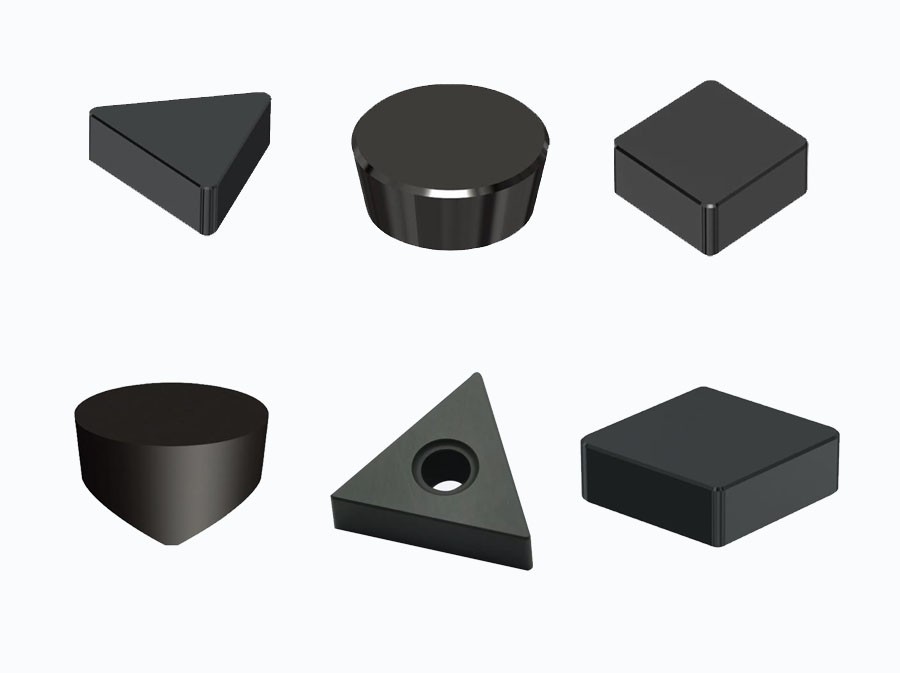
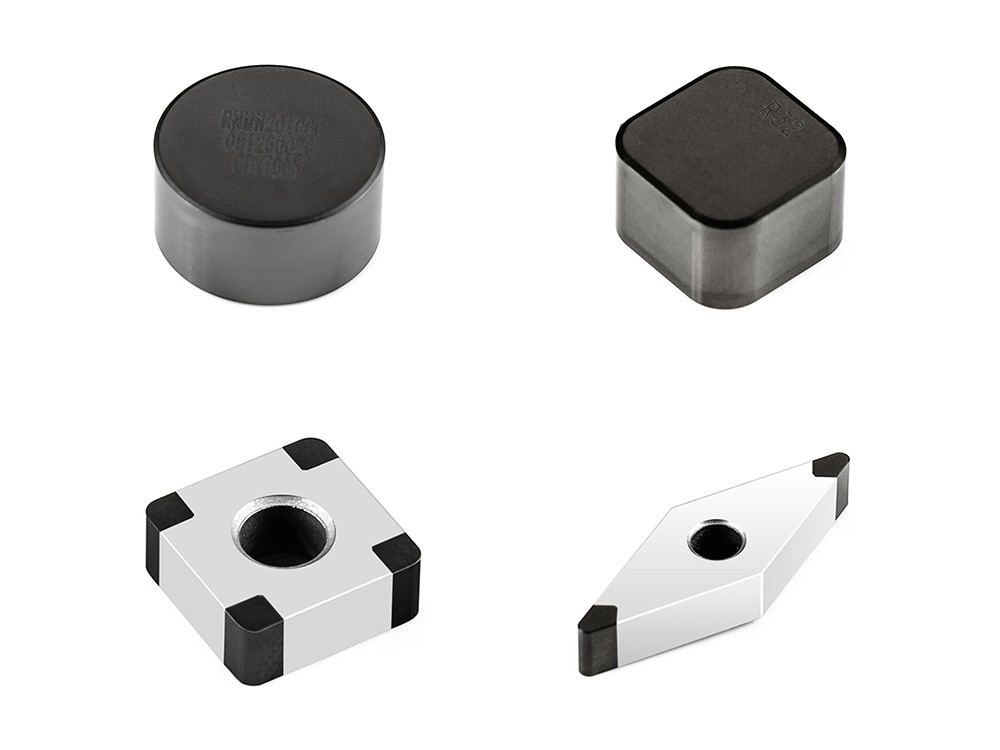
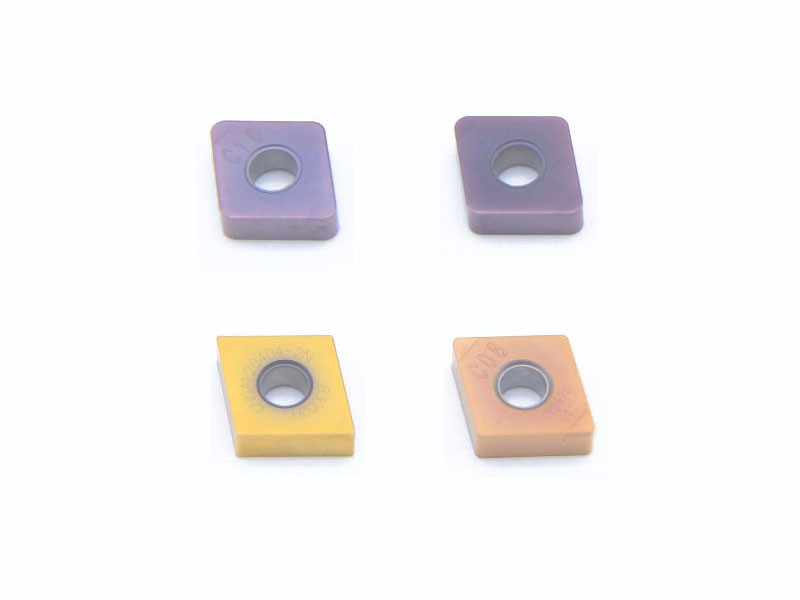
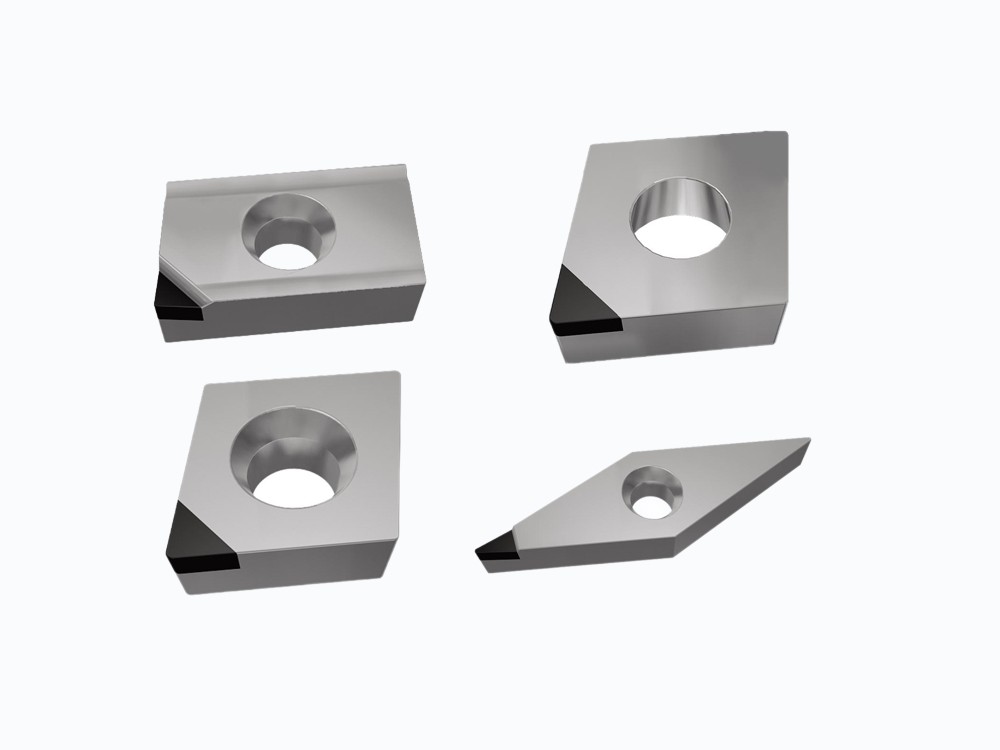
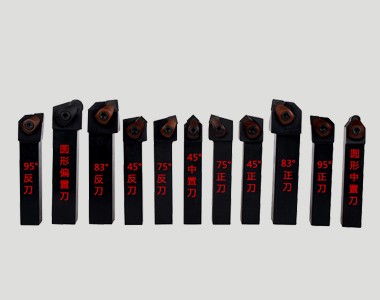
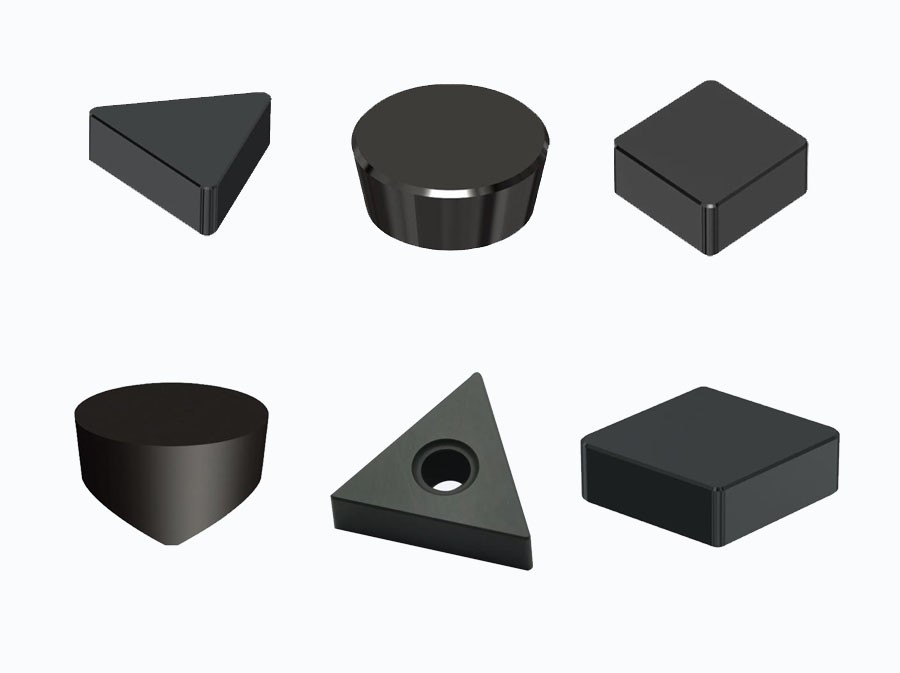
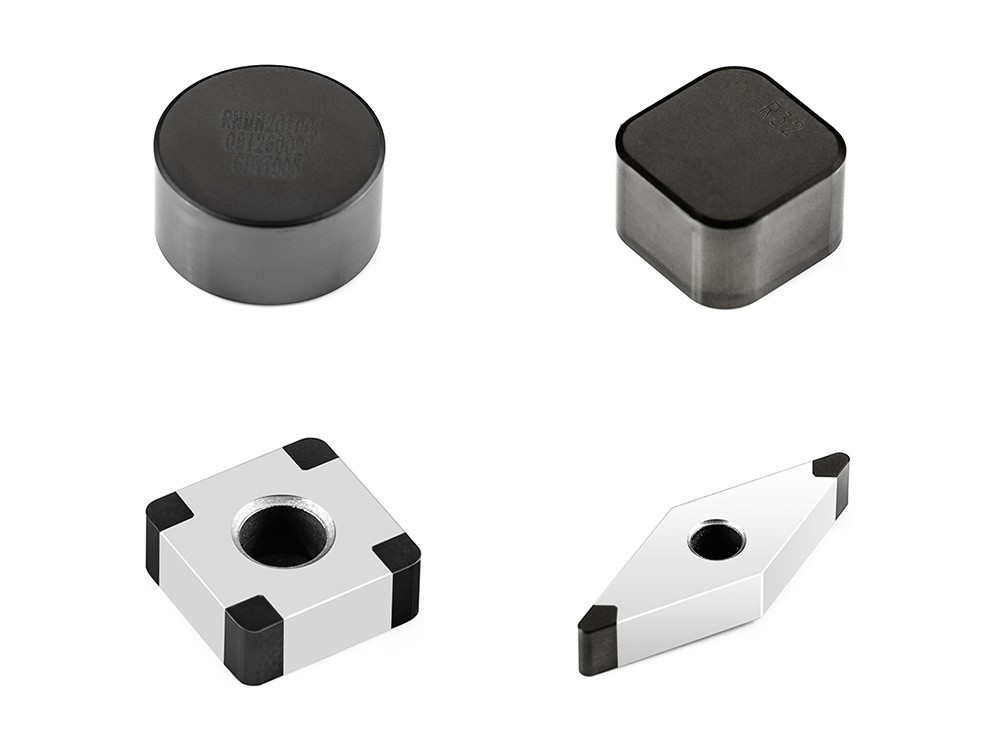
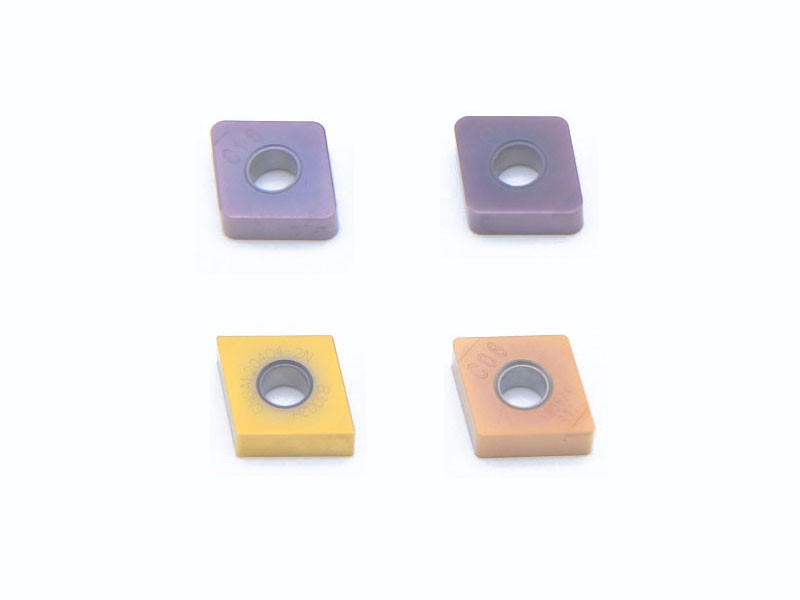
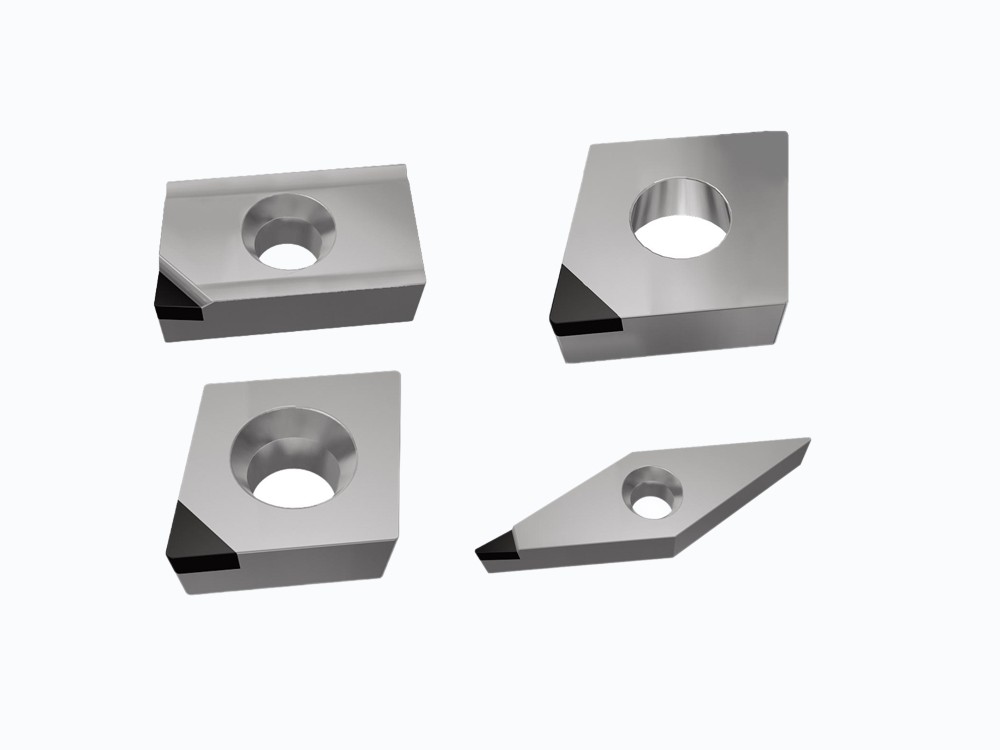
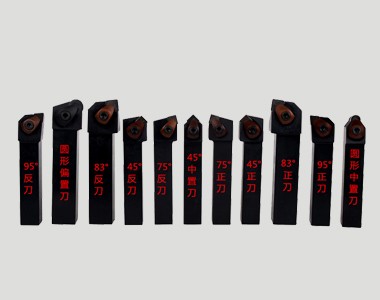
Huamin's superhard tooling series includes many coated tools, such as the coated CBN and PCD blank tool series. Proper surface treatment of these tools can improve tool life, reduce machining cycle time, and enhance the surface finish.

This article will briefly introduce some common properties of tool coatings and some commonly used PVD and CVD coating selection schemes. Each characteristic of the coating plays a crucial role in determining which coating is most beneficial for machining.
1. Coating Characteristics
Hardness
High surface hardness provided by the coating is one of the best ways to improve tool life. Generally speaking, the higher the hardness of the material or surface, the longer the tool life.
Titanium carbide (TiCN) coatings have higher hardness than titanium nitride (TiN) coatings. Due to the increased carbon content, the hardness of TiCN coatings is increased by 33%, with a hardness range of approximately Hv3000–4000 (depending on the manufacturer).
CVD diamond coatings with surface hardness up to Hv9000 are well-established in tool applications. Compared to PVD coated tools, CVD diamond coated tools have a 10–20 times longer life. The high hardness and cutting speed of diamond coatings, which can be 2–3 times higher than uncoated tools, make them a good choice for machining non-ferrous materials.
Wear Resistance
Wear resistance refers to the coating's ability to resist wear. While some workpiece materials may not inherently be very hard, elements added during manufacturing and the processes employed can cause chipping or dulling of the cutting edge of the tool.
Surface Lubrication
A high coefficient of friction increases cutting heat, leading to a shortened coating life or even failure. Reducing the coefficient of friction can significantly extend tool life. A smooth or textured coating surface helps reduce cutting heat because a smooth surface allows chips to slide quickly away from the rake face, reducing heat generation. Compared to uncoated tools, coated tools with better surface lubrication can also machine at higher cutting speeds, further preventing high-temperature welding with the workpiece material.
Oxidation Temperature
Oxidation temperature refers to the temperature at which the coating begins to decompose. A higher oxidation temperature is more beneficial for machining at high temperatures. Although the room temperature hardness of TiAlN coatings may be lower than that of TiCN coatings, it has proven to be much more effective than TiCN in high-temperature machining. (Add WeChat: Yuki7557 for a free macro programming tutorial.) The reason TiAlN coatings maintain their hardness at high temperatures is that an alumina layer forms between the tool and the chip, which transfers heat from the tool to the workpiece or chip. Compared to high-speed steel tools, carbide tools typically have higher cutting speeds, making TiAlN the preferred coating for carbide tools. Carbide drills and end mills often use this PVD TiAlN coating.
Anti-adhesion
The anti-adhesion property of the coating prevents or reduces chemical reactions between the tool and the workpiece, avoiding material deposition on the tool.
When machining non-ferrous metals (such as aluminum and brass), built-up edge (BUE) often forms on the tool, causing tool chipping or workpiece dimensional deviations. Once the workpiece begins to adhere to the tool, the adhesion continues to expand.
When machining aluminum workpieces with form taps, the amount of aluminum adhering to the tap increases after each hole is machined, eventually causing the tap diameter to become too large, resulting in workpiece dimensional deviations and scrap. Coatings with good anti-adhesion properties can even be effective in machining applications with poor coolant performance or insufficient concentration.
2.Commonly Used Coatings
Titanium Nitride Coating (TiN)
TiN is a general-purpose PVD coating that improves tool hardness and provides a high oxidation temperature. This coating achieves excellent machining results for high-speed steel cutting tools or forming tools.
Titanium Carbonitride Coating (TiCN)
The carbon added to TiCN coatings improves tool hardness and provides better surface lubrication, making it an ideal coating for high-speed steel tools.
Titanium Aluminum Nitride or Titanium Aluminum Nitride Coating (TiAlN/AlTiN)
The alumina layer formed in TiAlN/AlTiN coatings effectively improves the high-temperature machining life of tools. This coating is suitable for carbide tools primarily used in dry or semi-dry cutting. Depending on the ratio of aluminum to titanium in the coating, AlTiN coatings can provide higher surface hardness than TiAlN coatings, making it another viable coating option for high-speed machining.
Aluminum Chromium Nitride Coating (AlCrN)
The excellent anti-adhesion properties of AlCrN coatings make it the preferred coating for machining processes prone to built-up edge formation. After applying this virtually invisible coating, the machining performance of high-speed steel or carbide tools and forming tools will be significantly improved.
Diamond Coating
CVD diamond coating provides optimal performance for tools machining non-ferrous metals and is ideal for machining graphite, metal matrix composites (MMC), high-silicon aluminum alloys, and many other highly abrasive materials (Note: Pure diamond-coated tools cannot be used to machine steel because machining steel generates a large amount of cutting heat, leading to a chemical reaction that destroys the adhesion layer between the coating and the tool).
Coatings suitable for hard milling, tapping, and drilling vary and have specific applications. Furthermore, multilayer coatings can be used, where other coatings are embedded between the surface layer and the tool substrate, further improving tool life.
3. Successful Application of Coatings
Achieving cost-effective application of coatings may depend on many factors, but for each specific machining application, there are usually only one or a few viable coating options.
The correct selection of the coating and its properties can mean the difference between a significant improvement in machining performance and almost no improvement. Depth of cut, cutting speed, and coolant can all affect the effectiveness of tool coatings.
Because there are many variables in machining a workpiece material, one of the best ways to determine which coating to use is through trial cuts. Coating suppliers are constantly developing new coatings to further improve their high-temperature resistance, abrasion resistance, and wear resistance. It is always beneficial to work with coating (tool) manufacturers to validate the latest and best tool coatings for use in machining.
For all inquiries, please fill in the form below (* are required) to send us a brief message, and we will get back to you as soon as possible.